
Consolidate the source records
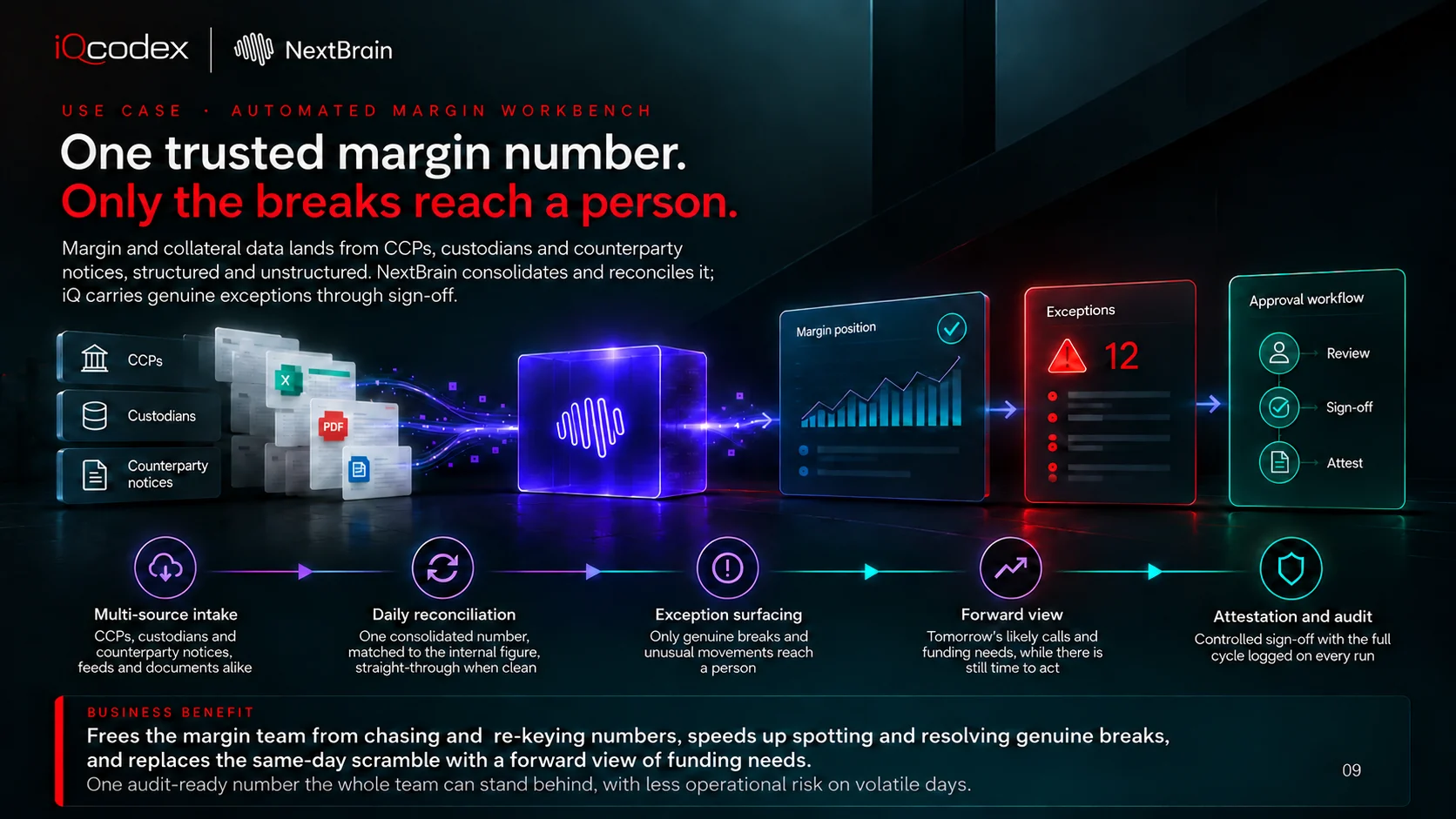
Bring relevant CCP, custodian and counterparty information into a consistent process. Preserve the source and the period to which each figure relates.
Margin & Collateral
Consolidate CCP, custodian and counterparty data. Review reconciliation breaks, track exceptions and control margin sign-off with iQ + NextBrain.
THE CHALLENGE
Margin and collateral teams work with structured feeds, statements and notices from multiple sources. Differences between external and internal figures need investigation, ownership and resolution. When reconciliation and sign-off happen across separate files and inboxes, it is harder to explain the current position and follow each outstanding break.
FROM DATA TO DECISION
Bring relevant CCP, custodian and counterparty information into a consistent process. Preserve the source and the period to which each figure relates.
Compare the consolidated records with the internal figures using agreed matching rules. Route differences and unusual movements to the responsible person.
Track investigation, approval and attestation. Keep supporting evidence and unresolved items visible through the workflow.
NextBrain assists the interpretation and consolidation of structured and unstructured inputs. iQsuite carries exceptions through ownership, review and sign-off. The overview also describes a forward view of potential calls and funding needs; that use requires appropriate data and project-level validation.
iQ WORKFLOW + NEXTBRAIN AI
WORKFLOW USE CASE
Margin and collateral information arrives from central counterparties (CCPs), custodians and counterparty notices, across feeds and documents. Teams need to reconcile the figures, investigate breaks and prepare a consistent position for review.
Consolidate the inputs, match them with internal figures and route reconciliation breaks through review and sign-off. A forward view of potential calls and funding needs supports operational planning.
What to evaluate. Assess reconciliation correctness, unresolved breaks, source completeness and review effort. Forecasts and funding assumptions need validation for the intended operating process.
Define the external and internal records to compare, the matching rules and the point at which a difference becomes an exception. Keep confirmed source figures distinct from forward-looking estimates, and agree who reviews and signs off the result.
Industry context: ISDA describes portfolio reconciliation as aligning trade details, exposures and collateral balances to identify discrepancies that need review. ISDA collateral management operational practices ↗
Source: iQ + NextBrain FS&I Solution Overview · September 2026 · v1.0
Assess matching correctness, source completeness, unresolved breaks and time spent investigating exceptions. Compare with the current process on the same records and distinguish reconciled figures from forecasts.
It compares relevant exposures, balances and records to identify differences needing review. The proposed workflow brings source data, breaks, ownership and sign-off into one process.
Relevant inputs can include CCP and custodian information and counterparty notices, across feeds and documents. Specific connections, data coverage and matching rules are agreed during scoping.
Reconciliation breaks and unusual movements are routed for review. The criteria for automated processing and human intervention must be configured and evaluated for the process.
This page describes data handling, reconciliation and controlled review. It does not claim automatic execution of collateral transfers or financial transactions.
Workflow Automation
Tell us which decision is difficult, what data you have and which constraints matter. We will review how the approach fits your problem.