
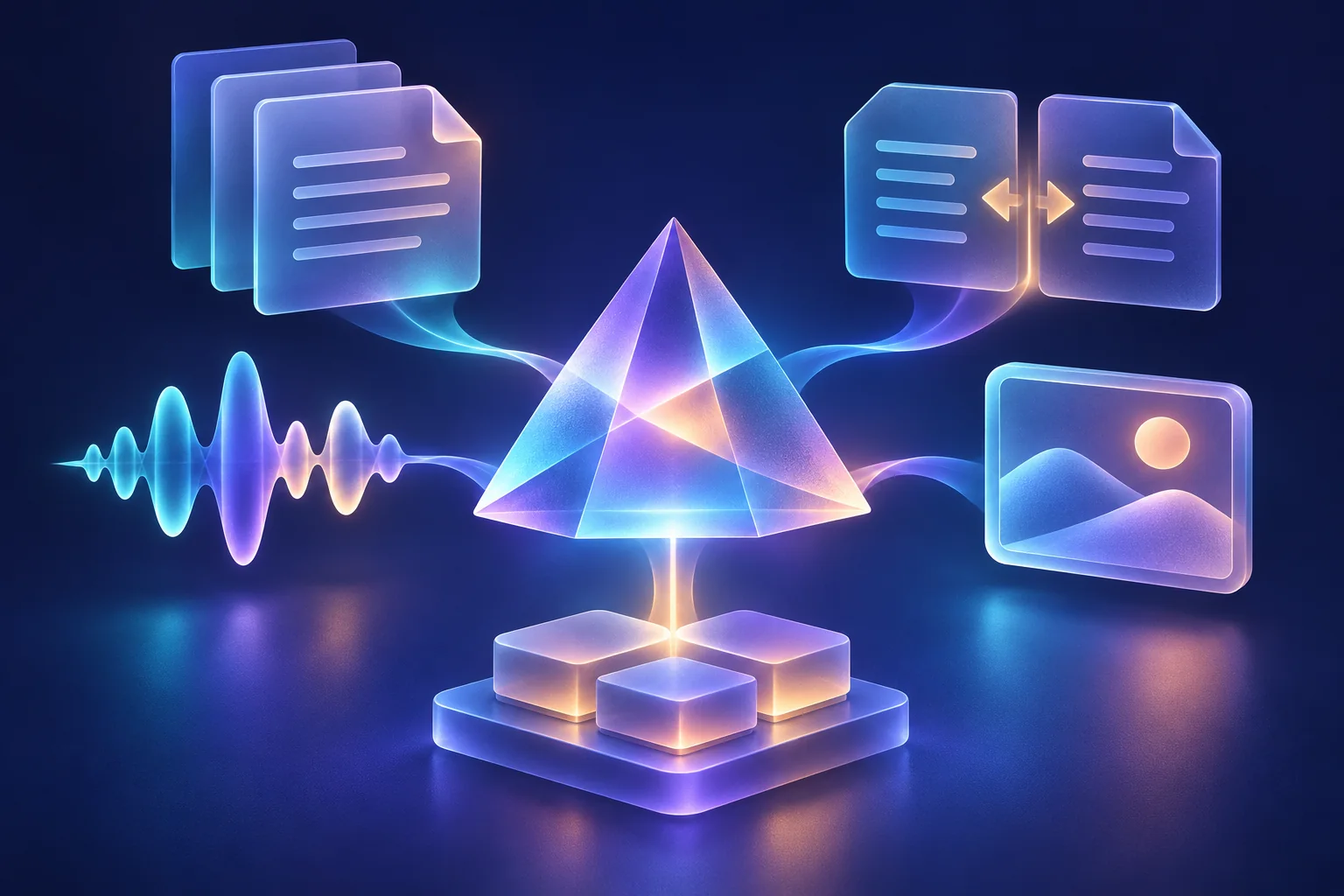
Multimodal AI processes more than one type of input, such as text, images and audio. For businesses, that can help connect a document with a photograph or a recorded explanation. The challenge is preserving where each claim came from and deciding what happens when the sources disagree.
On April 28, 2026, NVIDIA announced Nemotron 3 Nano Omni, combining text, image, audio and video understanding in an open model. The practical opportunity is broader input coverage, which still needs task-specific evaluation rather than a single general capability score.
Start with the information a decision needs
An illustrative maintenance request may contain a written description, a photo of equipment and a voice note. Determine which input supports the equipment identifier, observed condition and requested action. Do not process every available attachment simply because the model accepts it.
Define the output structure and the evidence required for each field. A claim based on a photograph should point to the relevant image; a claim from audio should include a timestamp or transcript reference.
Keep source quality visible
A blurry photograph, a noisy recording and an incomplete scan introduce different uncertainties. Capture those limitations rather than presenting all extracted information with the same apparent confidence.
Keep original files available to authorized reviewers. Normalizing everything into one block of text can discard layout, visual evidence or speaker context needed to verify a conclusion. This also matters in document comparison.
Define how conflicts are handled
Suppose a voice note gives one delivery date while the signed document gives another. The workflow needs a rule about authoritative sources and an escalation path. The model should identify the discrepancy instead of silently choosing a plausible value.
Record the source, effective time and reason for the chosen outcome. Some disagreements reflect a genuine update; others reflect transcription errors or a mismatched attachment. The response should preserve that distinction.
Evaluate each input and their combinations
Test documents, images and audio separately before combining them. Include missing attachments, unfamiliar accents, poor scans and conflicting inputs. Compare the combined workflow with a simpler text-based baseline on the same decision.
Measure correctness, traceability, review effort and processing cost. Add permission tests so that information from a restricted attachment does not leak into an otherwise accessible summary. Use a common AI evaluation framework to assess the result.
Introduce one additional input type
Choose a workflow where a second modality supplies information that text alone cannot provide reliably. Talk to NextBrain AI about the evidence, access controls and automation steps your team needs.